Turn-Milling Compound Process: A “Versatile Expert” in Precision Manufacturing, Unlocking a New Paradigm of Efficient Machining
In the field of precision mechanical manufacturing, “efficiency, accuracy, and integration” have long become core demands. The separate operation of traditional turning and milling processes often faces pain points such as cumbersome procedures, large clamping errors, and low production efficiency, making it difficult to meet the mass production needs of complex parts. As an integrated processing technology that combines turning, milling, drilling and other processing methods, the turn-milling compound process, with its unique processing advantages, has gradually become a “standard process” in high-end manufacturing, aerospace, auto parts and other fields, redefining the upper limit of processing efficiency and quality of precision parts.
Today, we will deeply dissect the turn-milling compound process, talk about its core principles, core advantages, typical application scenarios, and key technical points in industrial applications, to help you fully understand this “versatile expert” in the field of precision manufacturing.
I. What is Turn-Milling Compound Process? Analysis of Core Principles
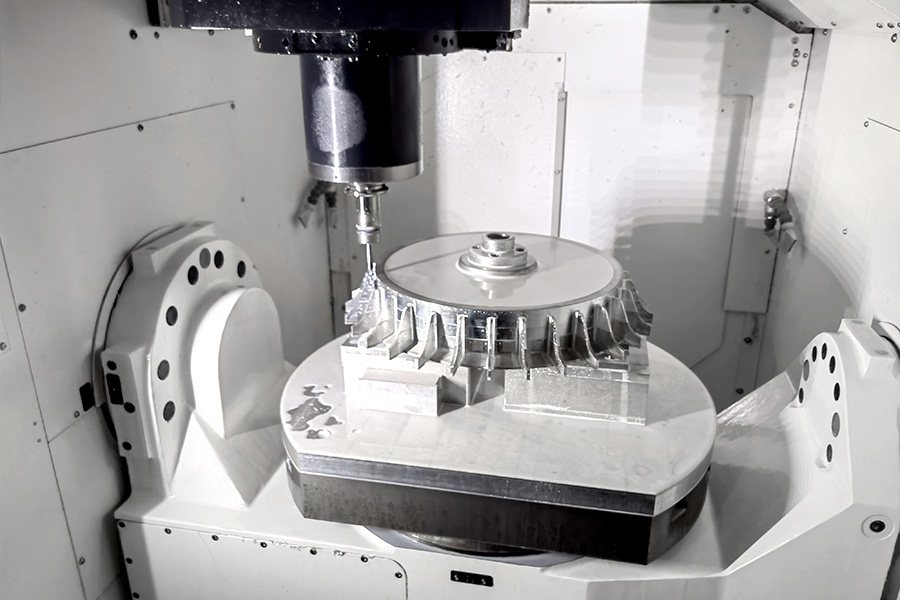
Simply put, the turn-milling compound process completes multiple processing procedures such as turning, milling, boring, drilling, and tapping on a single turn-milling compound machining center, without the need to transfer and clamp the workpiece between multiple equipment. Its core logic is “one clamping, complete all processing”. Through the multi-axis linkage of the machine tool (usually 3-axis, 4-axis or 5-axis linkage), the complex relative movement between the tool and the workpiece is realized, so as to process parts with complex structures and high precision requirements.
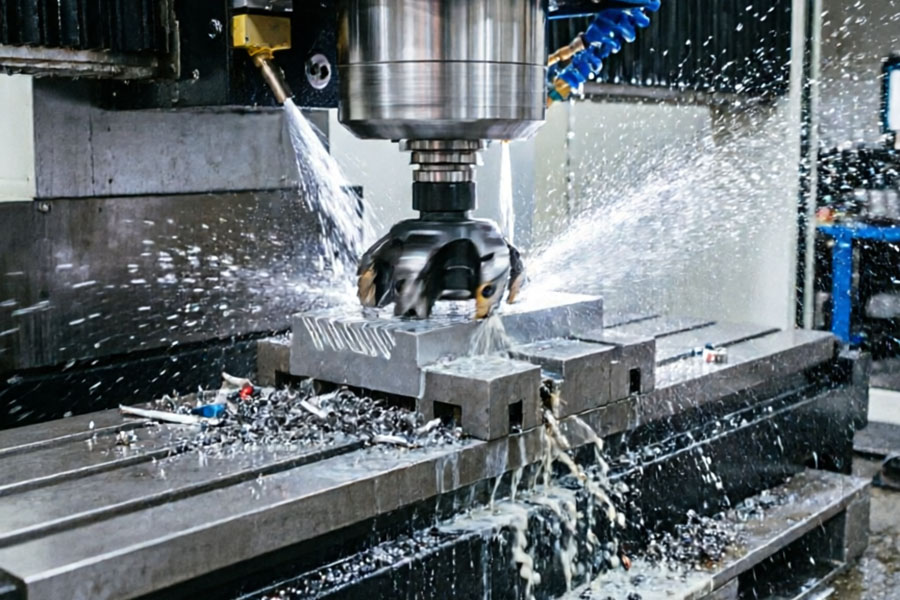
Compared with traditional single processing processes, the core difference of the turn-milling compound process lies in “integration” and “linkage”: traditional turning can only realize the rotational movement (main movement) of the workpiece and the linear feed movement of the tool, which is mainly used to process simple features such as the outer circle, inner hole and end face of shaft and disc parts; traditional milling is the rotation of the tool (main movement) and the linear feed of the workpiece, focusing on processing features such as planes, grooves and curved surfaces. By integrating the movement modes of the two processes, the turn-milling compound machining center can not only realize the rotational turning of the workpiece, but also the rotational milling of the tool, and can complete the one-time processing of complex curved surfaces and special-shaped structures through multi-axis linkage, fundamentally solving the pain points of multi-process processing.
In terms of structure, turn-milling compound machining centers are mainly divided into two categories: one is “turning-based, milling-assisted”, that is, adding milling functions on the basis of ordinary lathes, which is suitable for the compound processing of shaft parts; the other is “milling-based, turning-assisted”, that is, adding a turning spindle on the basis of machining centers, which is suitable for the processing of complex special-shaped parts. Regardless of the type, its core advantages are concentrated in the three dimensions of “reducing clamping, improving precision and increasing efficiency”.
II. Core Advantages of Turn-Milling Compound Process: Why It Becomes the First Choice for Precision Manufacturing?
In the field of precision manufacturing, the reason why the turn-milling compound process can be popularized rapidly is that it perfectly solves many pain points of traditional processing processes. Its advantages are mainly reflected in the following 5 aspects, each of which directly hits the core needs of the industry.
1. Reduce Clamping Times and Greatly Improve Processing Precision
In traditional processing, complex parts often need to be transferred between multiple equipment such as lathes, milling machines and drilling machines. Each clamping will produce clamping errors. After the superposition of multiple clampings, the dimensional accuracy and geometric tolerance (such as coaxiality and parallelism) of the parts will be seriously affected. The turn-milling compound process realizes “one clamping, full-process processing”. The workpiece only needs to be clamped once on the machining center to complete all procedures, which fundamentally eliminates the errors caused by multiple clampings. The processing precision can be stably maintained at ±0.005mm, fully meeting the precision processing needs of high-end parts.
For example, the shaft parts in the aerospace field not only require high outer circle precision, but also need to process multiple special-shaped grooves and holes on the shaft. Traditional processing requires 3-4 clampings, and the error is difficult to control; while turn-milling compound processing can complete all processing with one clamping, and the coaxiality can be controlled within 0.003mm, which greatly improves the qualified rate of parts.
2. Shorten Processing Flow and Improve Production Efficiency
In traditional multi-process processing, in addition to the time-consuming clamping, a lot of time is also spent on equipment debugging, workpiece transfer and process connection. Often, the processing of one part needs to cross multiple workshops and shifts. The turn-milling compound process integrates multiple procedures into one, without transferring workpieces or repeatedly debugging equipment. The processing flow is greatly shortened, and the production efficiency can be increased by 30%-50%, which is especially suitable for the production of small-batch and multi-variety complex parts.
In addition, the multi-axis linkage function of the turn-milling compound machining center can realize “one tool with multiple functions”. For example, when processing shaft parts, it can complete outer circle turning, keyway milling and end face drilling at the same time, without changing tools and equipment, further saving processing time and improving production efficiency.
3. Reduce Production Costs and Manpower Input
From the cost perspective, the advantages of the turn-milling compound process are very obvious: on the one hand, it reduces the investment in multiple equipment, eliminating the need to purchase lathes, milling machines, drilling machines and other equipment at the same time, reducing equipment purchase costs and workshop floor space; on the other hand, one clamping completes all processing, reducing the input of clamping workers and transfer workers, and reducing labor costs; at the same time, the improvement of processing precision increases the qualified rate of parts, reducing the scrap rate and rework costs, and the comprehensive production cost can be reduced by 20%-30%.
4. Adapt to Complex Part Processing and Expand Processing Boundaries
With the development of the high-end manufacturing field, the structure of parts is becoming more and more complex, such as special-shaped shafts, complex curved surface discs, multi-station hole parts, etc. Traditional single processing processes are difficult to complete the processing. With the advantage of multi-axis linkage, the turn-milling compound process can easily meet the processing needs of complex structures. For example, the camshaft of automobile engine and the gear shaft of gearbox not only have outer circle and inner hole, but also have complex cam profiles, keyways and threads. Turn-milling compound processing can complete the processing of all features at one time without dividing procedures, which greatly improves the processing convenience.
5. Improve Processing Stability and Ensure Batch Consistency
The turn-milling compound machining center adopts an integrated design, which has higher machine rigidity. The relative movement between the tool and the workpiece is more stable during processing, reducing the impact of vibration on processing precision; at the same time, full automatic processing reduces human operation errors. During mass production, the size, precision and surface quality of parts have higher consistency, which is suitable for mass production of high-end parts.
III. Typical Application Scenarios of Turn-Milling Compound Process: Covering High-End Needs of Multiple Industries
The advantages of the turn-milling compound process determine that its application scenarios are mainly concentrated in the high-end manufacturing field with high requirements for precision, efficiency and complexity. At present, it has been widely used in aerospace, automobile manufacturing, precision instruments, medical equipment, new energy and other industries. The following are several typical application cases.
1. Aerospace Field
Parts in the aerospace field (such as aircraft engine shafts, landing gear parts, aerospace connectors) require high precision, complex structures, special materials (such as titanium alloys, superalloys), and extremely high reliability requirements. The turn-milling compound process can realize one-time processing of complex structures, avoid errors caused by multiple clampings, and adapt to the processing needs of difficult-to-process materials, greatly improving the reliability and service life of parts. For example, the turbine shaft of an aircraft engine needs to process multiple special-shaped blades, threaded holes and grooves. Turn-milling compound processing can complete it at one time, and its precision and efficiency are far superior to traditional processes.
2. Automobile Manufacturing Field
High-end precision parts in auto parts, such as gearbox gear shafts, camshafts, steering system parts, etc., have large batches and high precision requirements, and traditional processing efficiency is difficult to meet the needs. The turn-milling compound process can realize integrated multi-process processing, improve production efficiency, ensure the consistency of batch parts, and reduce production costs. At present, it has become one of the core processes for the production of high-end auto parts.
3. Precision Instruments and Medical Equipment Field
Precision instruments (such as sensors, instrument shafts) and medical equipment (such as surgical instruments, implantable parts) require high dimensional precision and good surface quality of parts, and their structures are often complex. The turn-milling compound process can realize micron-level precision processing, and avoid the impact of clamping errors on part performance, ensuring the stability and safety of instruments and equipment.
4. New Energy Field
Core parts in new energy vehicles, photovoltaic, wind power and other fields, such as motor shafts of new energy vehicles, precision connectors of photovoltaic brackets, and spindle parts of wind power equipment, need to balance precision and efficiency. Some parts are made of light alloys (such as aluminum alloys, magnesium alloys). The turn-milling compound process can realize efficient and precision processing, and adapt to the processing characteristics of light alloys, helping the product upgrading in the new energy field.
IV. Key Technical Points in the Application of Turn-Milling Compound Process
Although the turn-milling compound process has significant advantages, to give full play to its performance and realize efficient and precision processing, it is necessary to master the following key technical points to avoid affecting processing quality due to improper operation.
1. Equipment Selection: Matching Processing Needs
The selection of turn-milling compound machining center directly affects the processing effect. It is necessary to select the appropriate number of axes (3-axis, 4-axis, 5-axis), spindle speed, feed speed and tool system according to the structure, size, precision requirements and material of the parts. For example, for processing simple shaft parts, a 3-axis turn-milling compound machine tool can be selected; for processing complex special-shaped parts or curved surface parts, a 5-axis linkage turn-milling compound machine tool is required to ensure that the tool can reach all processing surfaces of the parts.
2. Tool Selection: Adapting to the Characteristics of Compound Processing
In turn-milling compound processing, the tool needs to adapt to both turning and milling movement modes. Therefore, the selection of the tool must balance rigidity, wear resistance and versatility. For example, when processing difficult-to-process materials (such as titanium alloys), carbide tools or diamond tools should be selected to improve tool life; when processing complex curved surfaces, ball-end milling cutters or end mills should be selected to ensure the precision of curved surface processing. At the same time, the tool clamping must be firm to avoid tool runout during processing, which affects processing quality.
3. Programming Optimization: Improving Processing Efficiency and Precision
The programming difficulty of turn-milling compound processing is higher than that of traditional single processes. It is necessary to reasonably plan the processing path, optimize the tool path, avoid tool interference, and reasonably allocate the processing sequence of turning and milling according to the processing characteristics of the parts to improve processing efficiency. In addition, when programming, the coordination of multi-axis linkage must be considered to ensure the synchronization of workpiece rotation and tool feed, reduce vibration, and improve processing precision.
4. Clamping Scheme: Ensuring Accurate Positioning and Sufficient Rigidity
Although the turn-milling compound process reduces the number of clampings, the quality of a single clamping directly determines the processing precision. When clamping, an appropriate clamping method (such as three-jaw chuck, four-jaw chuck, center clamping) should be selected to ensure accurate positioning of the workpiece. At the same time, the clamping force should be moderate, not only to avoid workpiece loosening, but also to prevent workpiece deformation. Especially for thin-walled parts, flexible clamping should be adopted to reduce the impact of clamping deformation on processing precision.
5. Process Parameter Adjustment: Adapting to Different Materials and Parts
Different materials (such as aluminum alloy, titanium alloy, stainless steel) have different processing characteristics, so it is necessary to adjust appropriate spindle speed, feed speed, cutting depth and cutting fluid parameters. For example, when processing aluminum alloy, higher spindle speed and feed speed can be adopted to improve processing efficiency; when processing titanium alloy, the speed should be reduced, the cutting depth should be reduced to avoid tool overheating, and appropriate cutting fluid should be selected to improve the cooling effect and extend the tool life.
V. Summary: Turn-Milling Compound Process, Leading the Upgrade of Precision Manufacturing
Today, as high-end manufacturing develops towards “precision, efficiency and integration”, the turn-milling compound process, with its core advantages of reducing clamping, improving precision, increasing efficiency and reducing costs, has gradually replaced traditional single processing processes and become the core solution for complex precision part processing. It not only unlocks the processing boundary of complex parts, but also helps enterprises improve production competitiveness, reduce production costs, and adapt to the high-end manufacturing needs of multiple industries.
With the continuous upgrading of technology, the precision, efficiency and intelligence level of turn-milling compound machining centers will continue to improve. In the future, they will further penetrate into more manufacturing fields and promote the continuous upgrading of the precision manufacturing industry. For enterprises, mastering the core technologies of the turn-milling compound process, reasonable selection, optimized programming and clamping can give full play to its advantages and take the initiative in the high-end manufacturing market.
If you have any questions about the application, equipment selection or programming optimization of the turn-milling compound process, please leave a message in the comment area to communicate and discuss the technical upgrading path of precision manufacturing together!
#TurnMillingCompoundProcess #PrecisionManufacturing #CNCMachining #MechanicalProcessing #HighEndManufacturing